


 348 / 912

340 Chapter 9
Copyright © 2017 Pearson Education, Inc.
97.
O
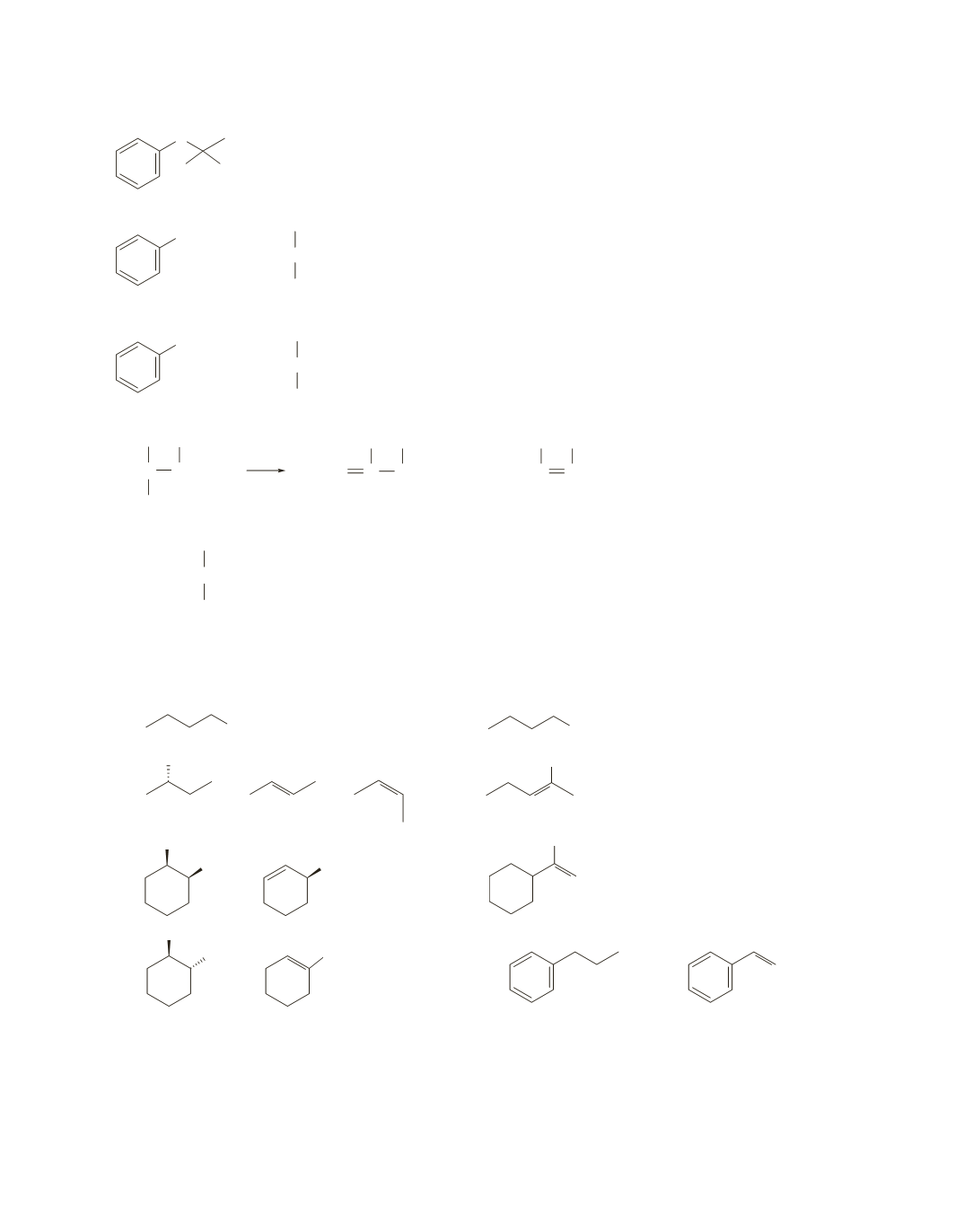
This ether cannot be made by a Williamson ether synthesis.
O
−
+
These reagents cannot be used because the tertiary
alkyl halide undergoes only an elimination reaction.
CH
3
CBr
CH
3
CH
3
Br
+
These reagents cannot be used because the aryl halide
cannot undergo a substitution reaction.
CH
3
CO
−
CH
3
CH
3
98.
CH
3
C
CH
3
CHCH
3
Br
CH
3
CH
2
C
base
CHCH
3
CH
3
CH
3
2,3-dimethyl-1-butene
CH
3
C CCH
3
CH
3
CH
3
2,3-dimethyl-2-butene
+
a.
CH
3
CH
2
CO
−
CH
2
CH
3
CH
2
CH
3
Because it is the most sterically hindered base,
B
gives the highest
percentage of the less stable 1-alkene because it is easier for it to
remove the most accessible hydrogen.
b.
CH
3
CH
2
O
-
Because it is the least sterically hindered base,
C
gives the highest
percentage of the more stable 2-alkene.
99.
a.
CHN
+
2
CH
3 3
)
)
b.
SCH
+
+
3
c.
+
OH
d.
+
OH
e.
OCH
3
f.
g.
h.
This primary alkyl halide forms more than the
usual amout of elimination product because the
new double bond is conjugated with the benzene
ring. Its greater stability makes it easier to form.
OCH
3
+