


 278 / 912

270 Chapter 8
Copyright © 2017 Pearson Education, Inc.
18.
a.
Ethylamine is a stronger base because when the lone pair on the nitrogen in aniline is protonated, it can
no longer be delocalized into the benzene ring. Therefore, aniline is less apt to share its electrons with
a proton.
b.
Ethoxide ion is a stronger base because a negatively charged oxygen is a stronger base than a neutral
nitrogen.
c.
Ethoxide ion is a stronger base because when the phenolate ion is protonated, the pair of electrons that
is protonated can no longer be delocalized into the benzene ring. Therefore, the phenolate ion is less
apt to share its electrons with a proton.
d.
The phenolate ion is the stronger base because its conjugate acid is a weaker acid than the conjugate
acid of acetic acid.
19.
The carboxylic acid is the most acidic because its conjugate base has greater delocalization energy than
does the conjugate base of phenol. The alcohol is the least acidic because, unlike the negative charge on the
conjugate base of phenol, the negative charge on the conjugate base of the alcohol cannot be delocalized.
C
O
OH
OH
CH
2
OH
>
>
20.
a.
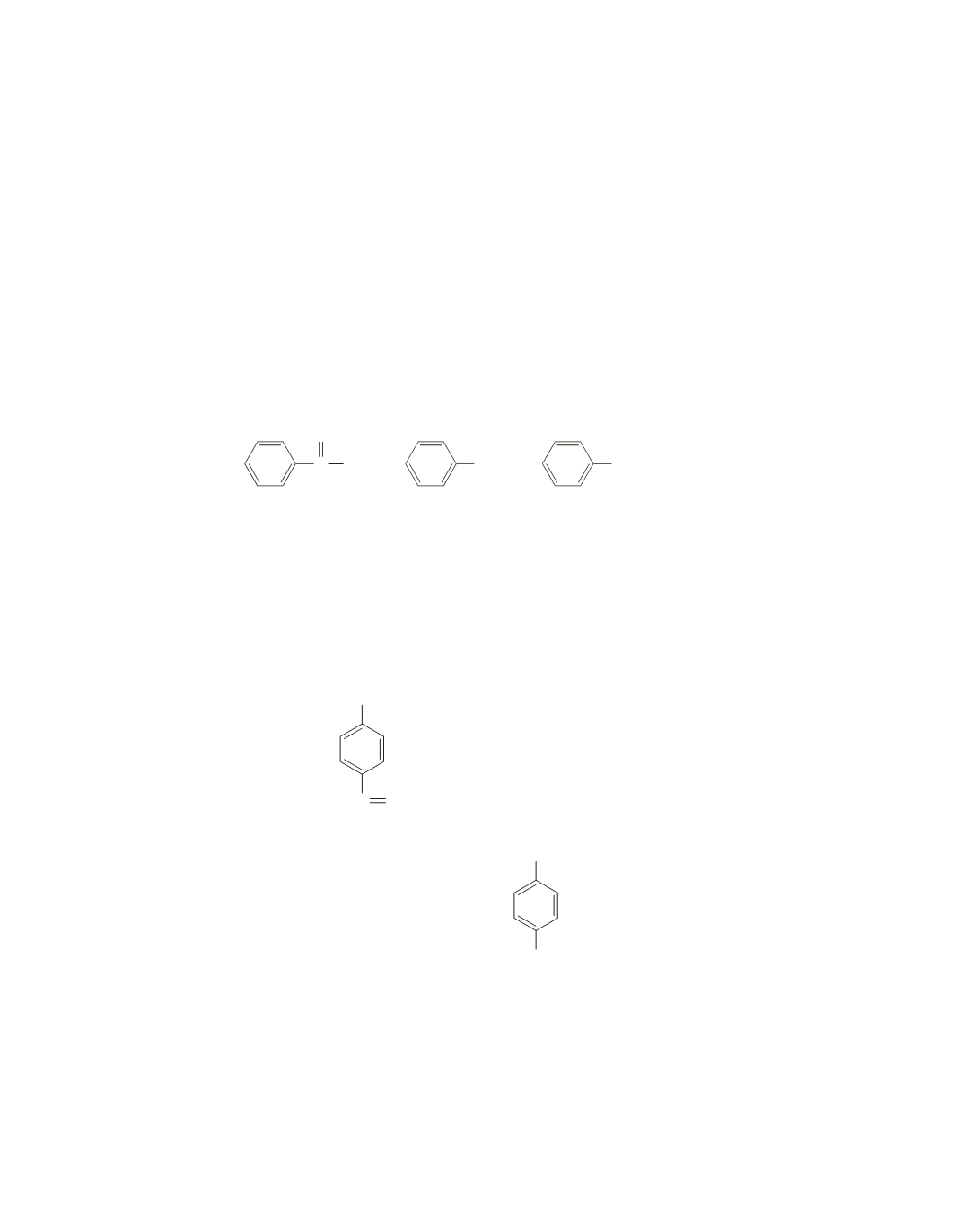
donates electrons by resonance and withdraws electrons inductively
b.
donates electrons by hyperconjugation
c.
withdraws electrons by resonance and withdraws electrons inductively
d.
donates electrons by resonance and withdraws electrons inductively
e.
donates electrons by resonance and withdraws electrons inductively
f.
withdraws electrons inductively
21.
For
a
and
b
, the closer the electron-withdrawing substituent is to the COOH group, the stronger the acid.
a.
ClCH
2
COOH
c.
O
COOH
CH
3
C
e.
HCOOH
A hydrogen is electron-
withdrawing compared
to a methyl group, because
a methyl group can donate
electrons by hyperconjugation.
b.
O
2
NCH
2
COOH
d.
H
3
N
+
CH
2
COOH
f.
COOH
Cl
22.
Solved in the text.