


 797 / 912

Chapter 24 789
Copyright © 2017 Pearson Education, Inc.
Chapter 24 Practice Test
1.
Draw a structure for the following:
a.
the intermediate formed when a nucleophile (
RO
-
) attacks the
g
-phosphorus of ATP
b.
an acyl pyrophosphate
c.
pyrophosphate
2.
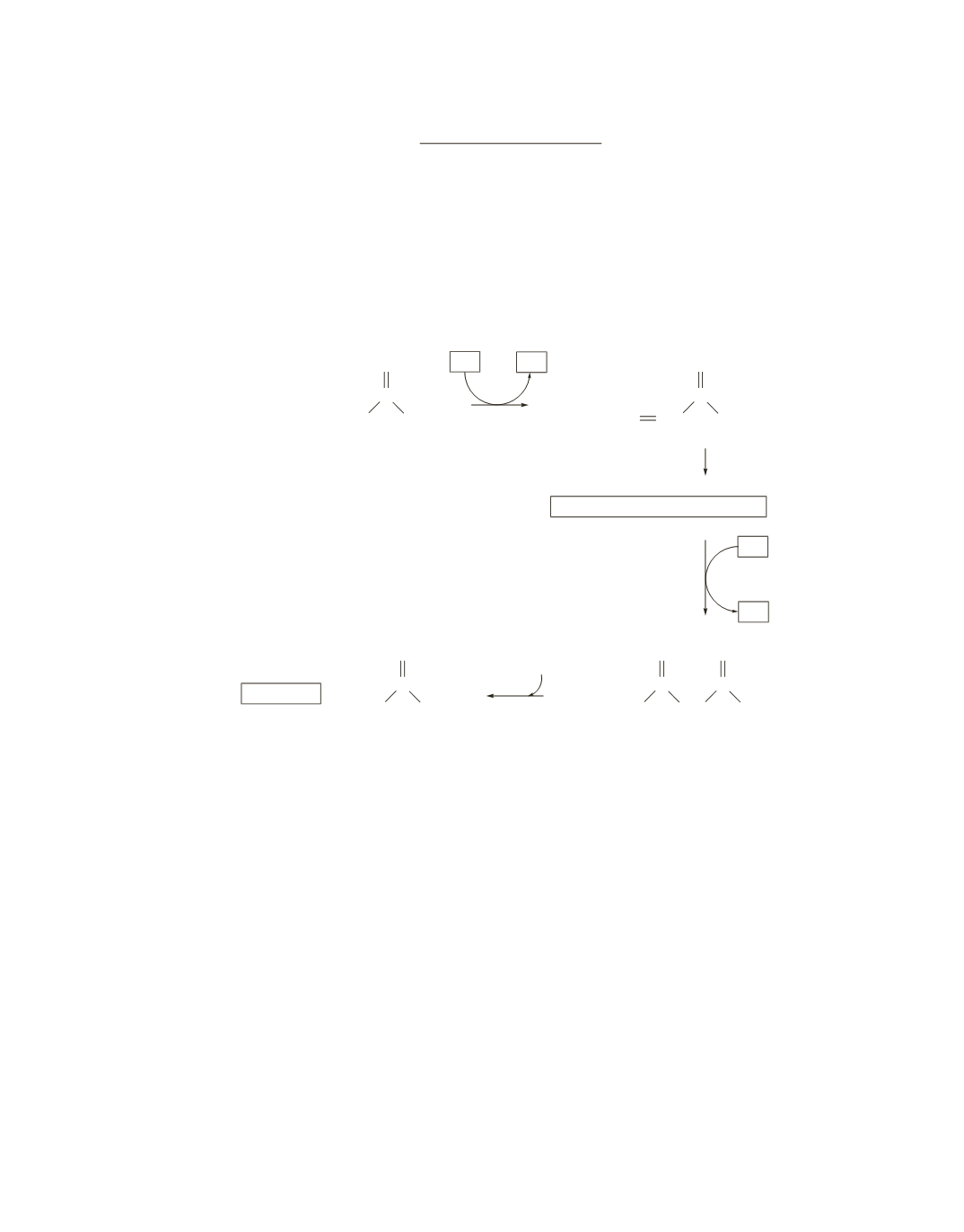
Fill in the six blanks in the following scheme:
RCH
2
CH
2
CH
2
CH
2
SCoA
CH SCoA
RCH
2
CH
2
CH
H
2
O
RCH
2
CH
2
CH
2
SCoA
CH
3
SCoA
+
CoASH
C
O
C
O
C
O
C
O
C
O
3.
Which of the following are not citric acid cycle intermediates: fumarate, acetate, citrate?
4.
Which provide energy to the cell: anabolic reactions or catabolic reactions?
5.
What compounds are formed when proteins undergo the first stage of catabolism?
6.
What compound is formed when fatty acids undergo the second stage of catabolism?
7.
Indicate whether each of the following statements is true or false.
a.
Each molecule of FADH
2
forms 2.5 molecules of ATP in the fourth stage of
catabolism.
T
F
b.
FADH
2
is oxidized to FAD.
T
F
c.
NAD
+
is oxidized to NADH.
T
F
d.
Acetyl-CoA is a citric acid cycle intermediate.
T
F