



 521 / 912

Chapter 15 513
Copyright © 2017 Pearson Education, Inc.
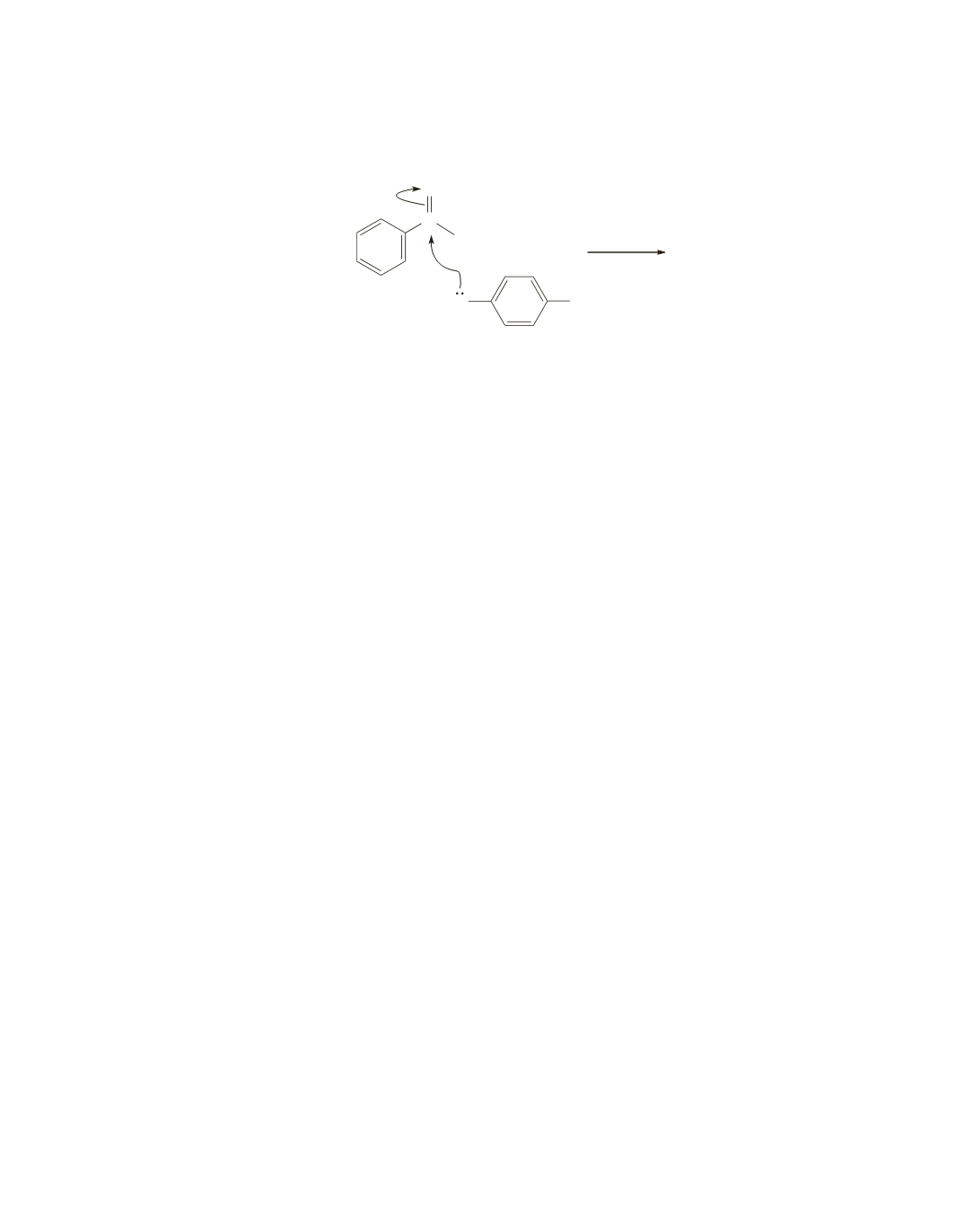
In amide formation with a series of anilines, electron donation increases the rate of the reaction by
increasing the nucleophilicity of the aniline. The
r
value for this reaction is, therefore, negative.
H
2
N
Y
C
O
Cl
b.
Because ortho substituents are close to the site of the reaction, they introduce steric factors into the rate
constant for the reaction. In other words, the presence of an ortho substituent can slow a reaction down
not because it can donate or withdraw electrons, but because it can get in the way of the nucleophile.
Therefore, any change in the rate is due to a combination of steric effects and the electron-donating or
electron-withdrawing ability of the substituent.
Because the change in rate cannot be attributed solely to the electron-donating or electron-withdrawing
ability of the substituent, ortho-substituted compounds were not included in the study.
c.
An electron-withdrawing substituent will make it easier for benzoic acid to lose a proton, so ionization
of a series of substituted benzoic acids will show a positive
r
value.