


 157 / 912

Chapter 3 149
Copyright © 2017 Pearson Education, Inc.
62.
a.
2-butanamine
b.
2-chlorobutane
c.
N
-ethyl-2-butanamine
d.
1-ethoxypropane
e.
2-methylpentane
f.
2-propanamine
g.
2-bromo-2-methylbutane
h.
4-methyl-1-pentanol
i.
bromocyclopentane
j.
cyclohexanol
63.
a.
1-bromohexane (larger, so greater surface
area)
b.
pentyl chloride (greater surface area than
the branched compound)
c.
1-butanol (fewer carbons)
d.
1-hexanol (forms hydrogen bonds)
e.
hexane (greater area of contact)
f.
1-pentanol (forms hydrogen bonds)
g.
1-bromopentane (bromine larger and more
polarizable)
h.
butyl alcohol (forms hydrogen bonds)
i.
octane (see Table 3.1)
j.
isopentyl alcohol (forms stronger hydrogen
bonds)
k.
hexylamine (primary amines form stronger
hydrogen bonds than do secondary amines)
64.
a.
CH
3
H
H
H
H
H
H
H
H
H
H
H
H
H
H
H
H
H
H
H
H
H
H
H
H
CH
3
CH
3
CH
3
CH
3
CH
3
CH
3
CH
3
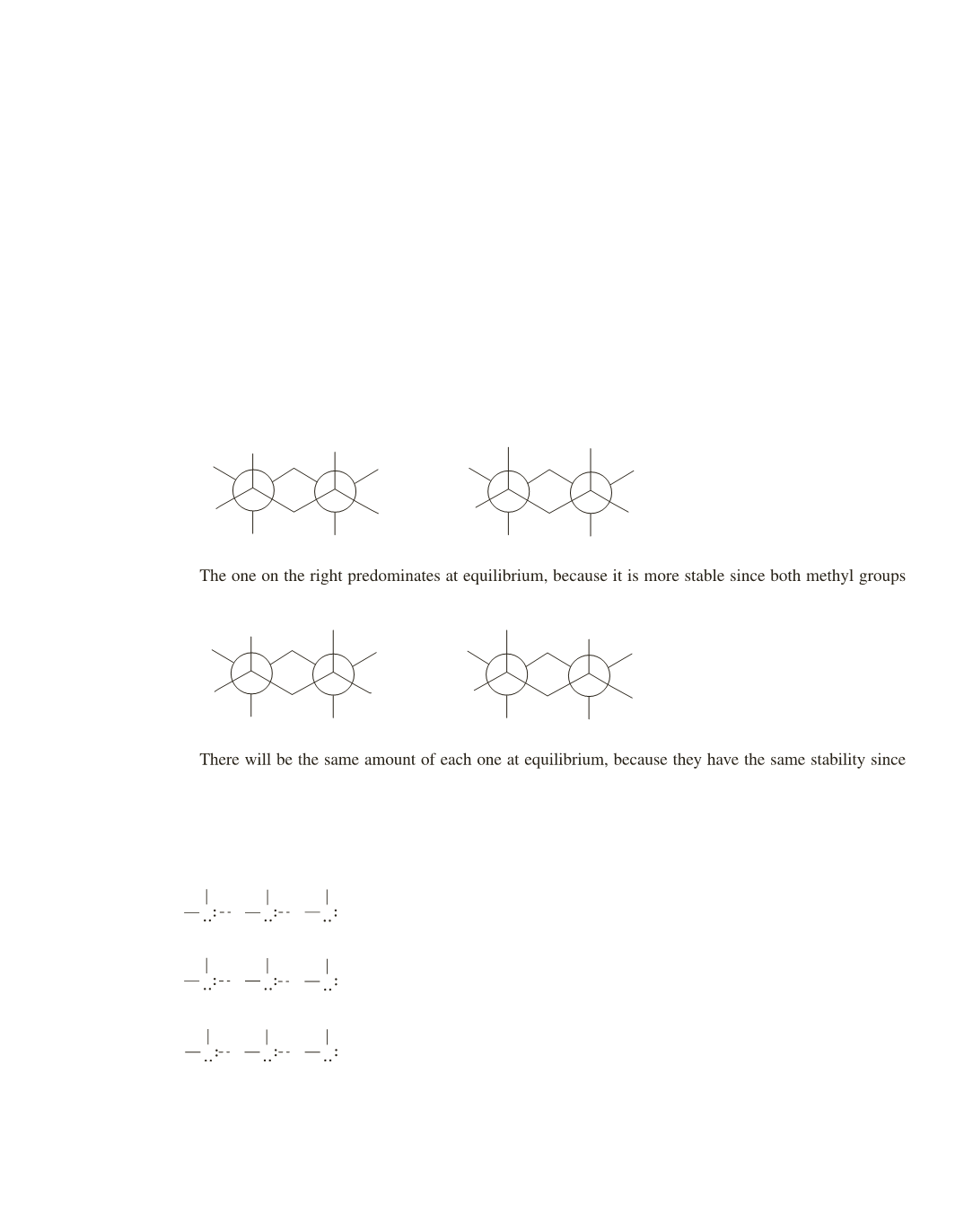
The one on the right would predominate at equilibrium because it is more stable since
both methyl groups are in equatorial positions.
There would be equal amounts of each one at equilibrium, because they have the same stability
axial position.
b.
are in equatorial positions.
c.
CH
3
H
H
H
H
H
H
H
H
H
H
H
H
H
H
H
H
H
H
H
H
H
H
H
H
CH
3
CH
3
CH
3
CH
3
CH
3
CH
3
CH
3
both methyl groups are in equatorial positions.
There would be equal amounts of each one at equilibrium, because they have the same stability
since each conformer has one methyl group in an equatorial position and one methyl group in an
axial position.
d.
e ch conformer has one methyl group in an equatorial position and one methyl group in an axial position.
65.
Ansaid is more soluble in water. It has a fluoro substituent that can form a hydrogen bond with water.
Hydrogen bonding increases its solubility in water.
66.
H
CH
3
H
CH
3
H
CH
3
H
CH
3
H
CH
3
H
CH
3
H O
CH
3
H
CH
3
H
CH
3
O
O
O
O
O
O O
O