



 727 / 912

Chapter 21 719
Copyright © 2017 Pearson Education, Inc.
43.
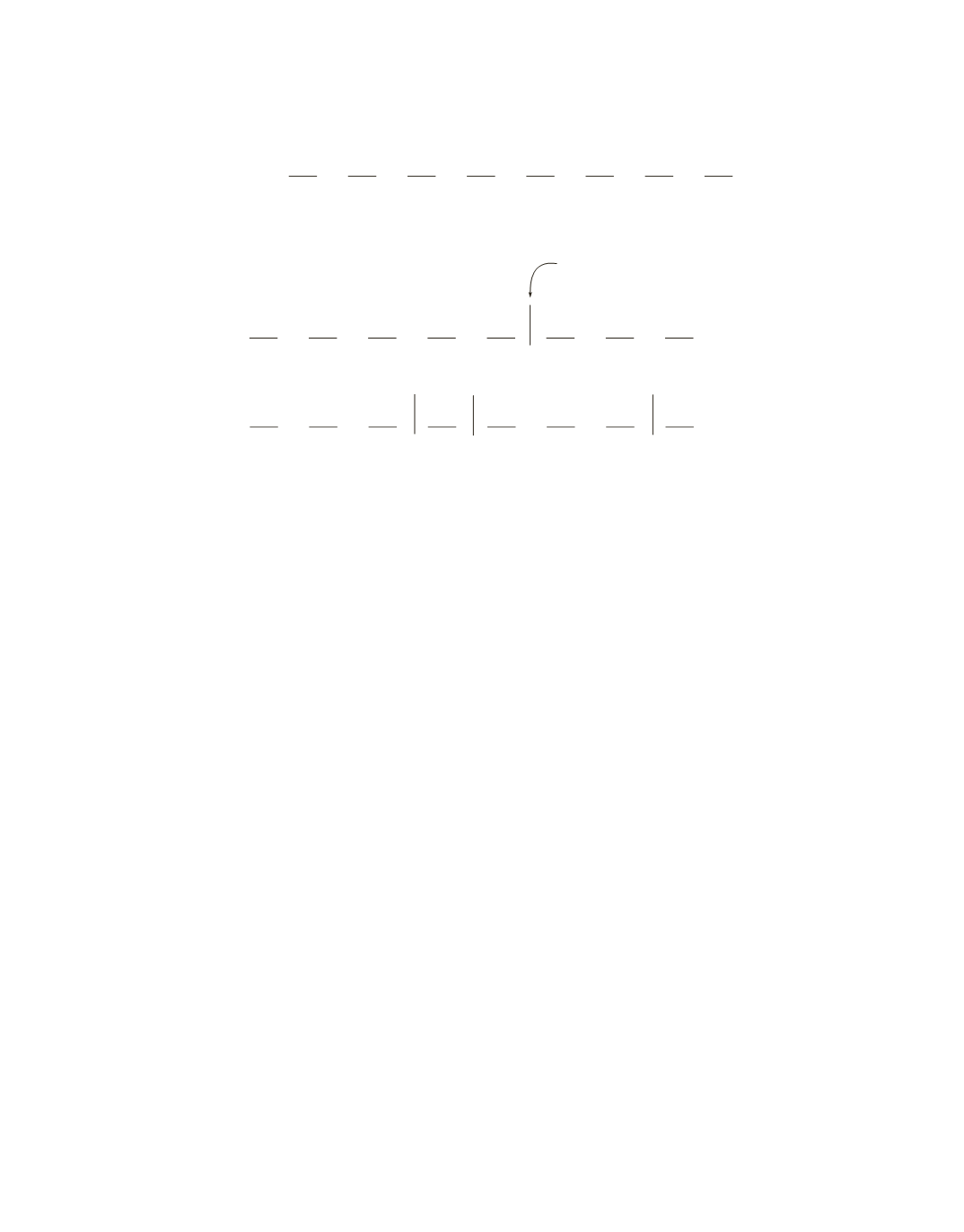
The data from treatment with Edman’s reagent and carboxypeptidase A identify the first and last amino acids.
Leu
Ser
The data from cleavage with cyanogen bromide identify the position of Met and identify the other amino
acids in the pentapeptide and tripeptide but not their order.
Leu
Met
Ser
Arg, Lys, Tyr
Arg, Phe
cleavage with cyanogen bromide
The data from treatment with trypsin put the remaining amino acids in the correct positions.
Leu
Met
Ser
Tyr
Lys
Arg
Arg
Phe
44.
a.
Trypsin cleaves at Arg and Lys. There are two possible primary structures:
Val
@
Gly
@
Asp
@
Lys
@
Leu
@
Glu
@
Pro
@
Ala
@
Arg
@
Ala
@
Leu
@
Gly
@
Asp
or
Leu
@
Glu
@
Pro
@
Ala
@
Arg
@
Val
@
Gly
@
Asp
@
Lys
@
Ala
@
Leu
@
Gly
@
Asp
The two possible primary structures can be distinguished by Edman’s reagent. Edman’s reagent will
release Val in one case and Leu in the other.
b.
Trypsin cleaves at Arg and Lys. There are two possible primary structures:
Ala
@
Glu
@
Pro
@
Arg
@
Ala
@
Met
@
Gly
@
Lys
@
Val
@
Leu
@
Gly
@
Glu
or
Ala
@
Met
@
Gly
@
Lys
@
Ala
@
Glu
@
Pro
@
Arg
@
Val
@
Leu
@
Gly
@
Glu
The two possible primary structures can be distinguished by treatment with cyanogen bromide.
Cyanogen bromide will cleave one of the possible polypeptides into two hexamers and the other into a
dimer and a decamer.
45.
a.
74 amino acids/3.6 amino acids per turn of the helix
=
20.6 turns of the helix
20.6 × 5.4 Å =
110 Å
in an
a
-helix (5.4 Å is the repeat distance of the
a
-helix.)
b.
74 amino acids × 3.5 Å =
260 Å
in fully extended polypeptide chain
46.
It would fold so that its nonpolar residues are on the outside of the protein in contact with the nonpolar
membrane and its polar residues are on the inside of the protein.
47.
A protein folds to maximize the number of polar groups on the surface of the protein and the number of
nonpolar groups on the inside of the protein.
a.
A cigar-shaped protein has the greatest surface area to volume ratio, so it has the highest percentage of
polar amino acids.
b.
A subunit of a hexamer has the smallest percentage of polar amino acids, because part of the surface of
the subunit can be on the inside of the hexamer and, therefore, have nonpolar amino acids on its surface.