



 514 / 912

506 Chapter 15
Copyright © 2017 Pearson Education, Inc.
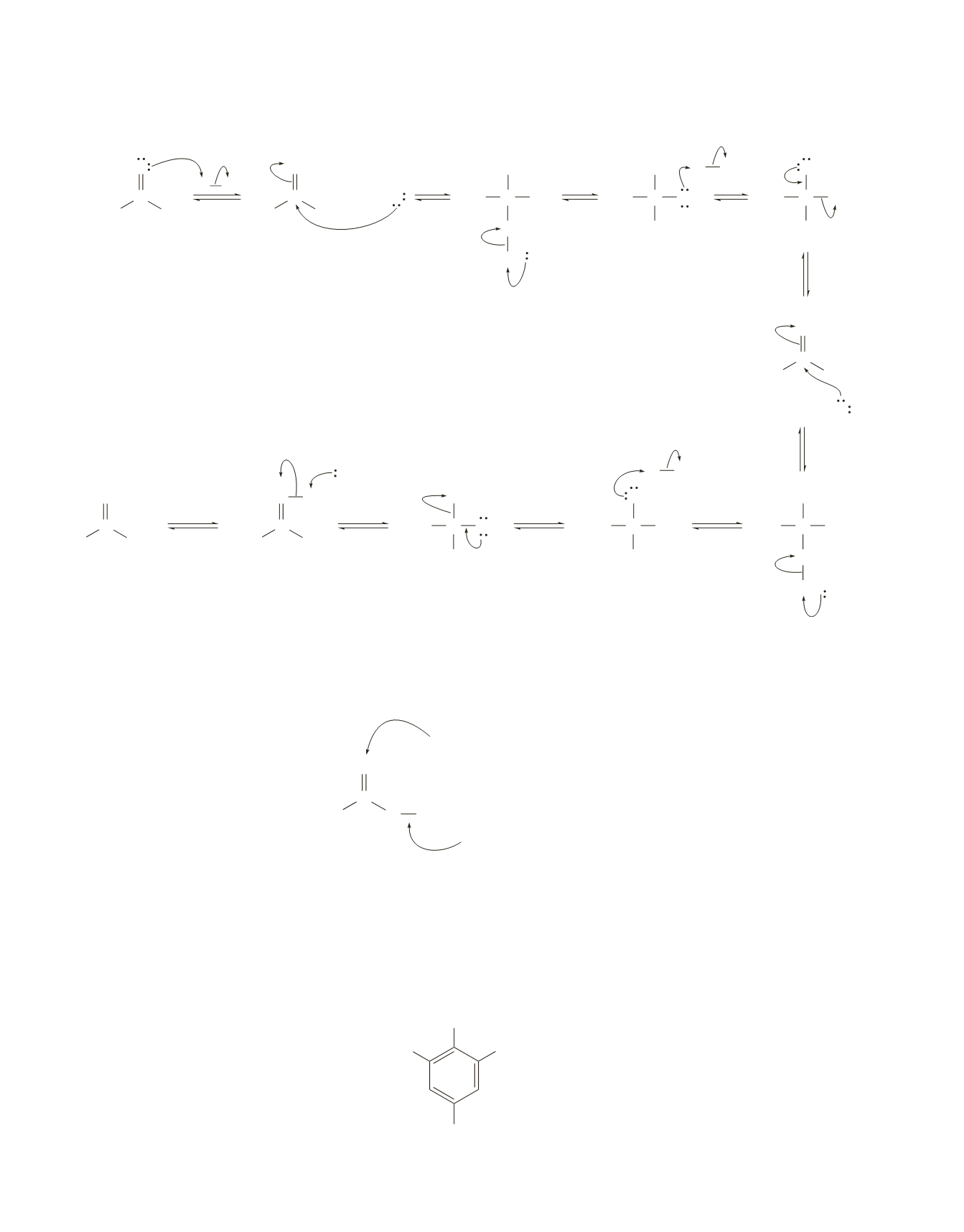
77.
a.
OH
CH
3
+
H
2
O
18
CH
3
C
OH
H
H B
CH
3
C OH
OH
18
OH
18
18
OH
CH
3
18
H
2
O
18
CH
3
C OH
H B
18
CH
3
C OH
OH
18
18
CH
3
C
OH
OH
OH
OH
18
18
OH
CH
3
18
18
+
+
+
OH
+
H
H
+
+
O
OH
B
C
OH
OH
OH
CH
3
C OH
OH
18
OH
OH
CH
3
C
H Cl
H B
+
+
+
H B
C
OH
C
O
OH
CH
3
18
C
18
O
b.
The carboxyl oxygen will be labeled.
Only one isotopically labeled oxygen can be incorporated into the ester because the bond between the
methyl group and the labeled oxygen does not break. Therefore, there is no way for the carbonyl oxygen to
become labeled.
O
CH
3
CH
3
18
cannot become labeled
bond does not break
C
O
c.
In the presence of an acid catalyst, the ester will be hydrolyzed to a carboxylic acid and an alcohol.
Both oxygen atoms of the carboxylic acid will be labeled for the same reason both oxygen atoms of the
carboxylic acid are labeled in part
a
. The alcohol will not contain any label, because the bond between
the methyl group and the oxygen does not break.
78.
a.
The steric hindrance provided by the methyl groups prevents methyl alcohol from attacking the car-
bonyl carbon.
COOH
H
3
C
CH
3
CH
3
b.
No, because there would be no steric hindrance to nucleophilic attack.