



 468 / 912

460 Chapter 14
Copyright © 2017 Pearson Education, Inc.
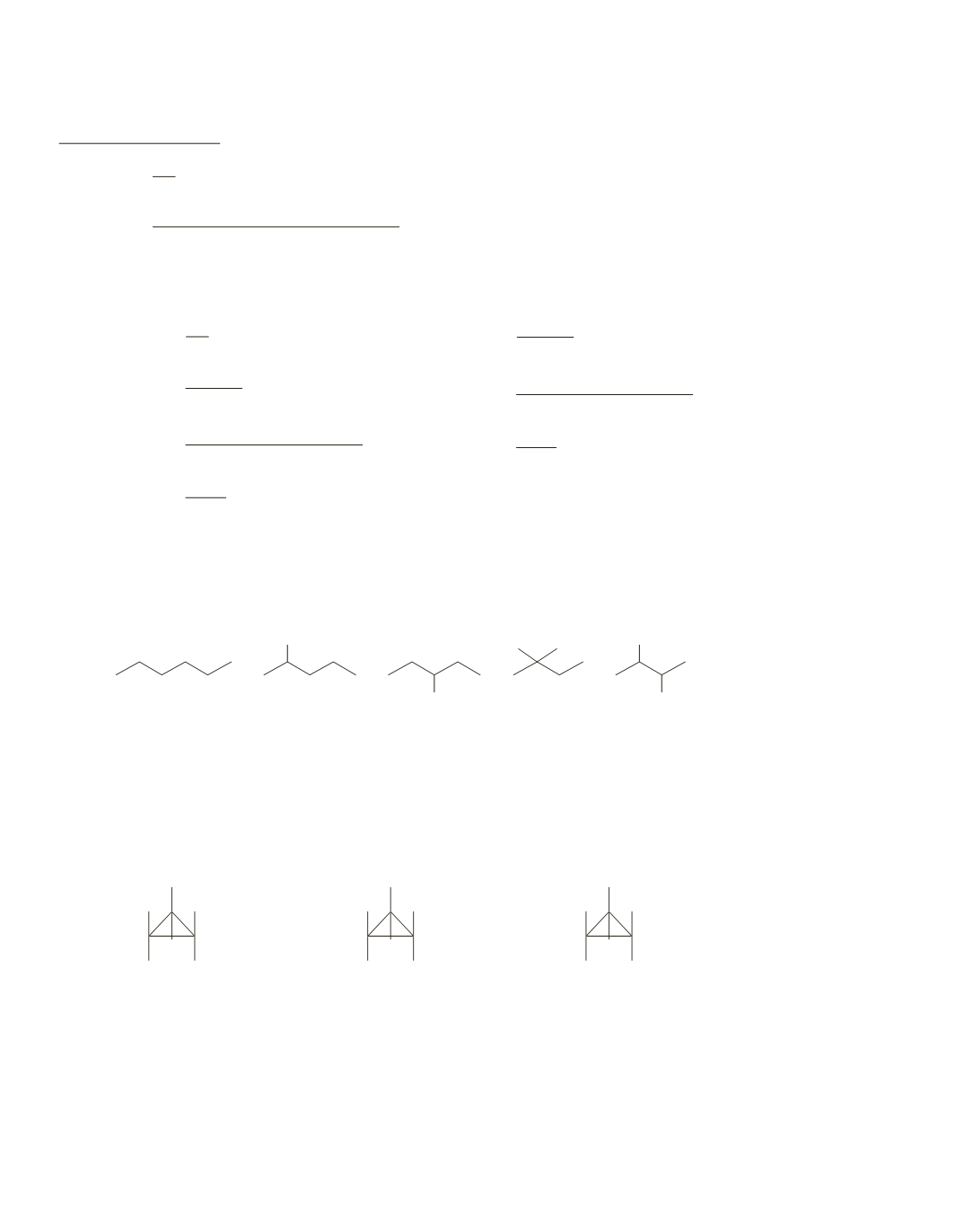
Solutions to Problems
1.
n
=
g
2
p
B
0
=
26.75
*
10
7
rad T
-
1
sec
-
1
*
1.0 T
2
1
3.1416
2
rad
=
43
*
10
6
sec
-
1
=
43
*
10
6
Hz
=
43 MHz
2.
a.
n
=
g
2
p
B
0
B
0
=
n
*
2
p
g
B
0
=
360
*
10
6
*
2
1
3.1416
2
26.75
*
10
7
B
0
=
226.2
26.75
B
0
=
8.46 T
b.
B
0
=
n
*
2
p
g
B
0
=
500
*
10
6
*
2
1
3.1416
2
26.75
*
10
7
B
0
=
314.2
26.75
B
0
=
11.75 T
From these calculations, you can see that the greater the operating frequency of the instrument (360 MHz
versus 500 MHz), the more powerful the magnet (8.46 T versus 11.75 T) required to operate it.
3.
3
5
4
3
2
4.
a.
2
b.
1
c.
1
d.
4
e.
1
f.
4
g.
3
h.
3
i.
5
j.
3
k.
4
l.
3
m.
3
n.
2
o.
3
5.
A
would give two signals,
B
would give one signal, and
C
would give three signals.
6.
a.
b.
c.
H
H
H
H
Cl
Cl
H
H
Cl
H
Cl
H
H
H
Cl
H
H
Cl
All the Hs are
equivalent.
The Hs attached to the front
of the molecule are equivalent,
and the methylene Hs are
equivalent.
The Hs attached to the
front of the molecule are
equivalent, and the methylene
Hs are not equivalent.