


 446 / 912

438 Chapter 13
Copyright © 2017 Pearson Education, Inc.
d.
CH
3
CCH
2
CH
2
CH
2
CH
3
−
e
−
-cleavage
CH
3
+
CH
2
CHCH
3
m
/
z
=
85
O
CH
3
CH
2
CH
2
CH
2
C O
CH
3
CH
2
CH
2
CH
2
CH
3
CCH
2
CH
2
CH
2
CH
3
O
+
m
/
z
=
100
+
-cleavage
+
m
/
z
=
43
CH
3
C O
CH
3
C CH
2
CH
2
CH
2
CH
3
+
+
O
CH
3
CCH
2
CH
2
CHCH
3
O
McLafferty
CH
3
CCH
2
OH
H
rearrangement
+
+
m
/
z
=
58
+
•
•
•
•
•
•
e.
−
e
−
+
CH
3
CH
2
CH Cl
CH
3
CH
2
CHCl
m
/
z
=
92 and 94
CH
3
CH
3
CH
2
CH
CH
3
Cl
m
/
z
=
57
CH
3
CH
2
CH
CH
3
+
+
CH
3
CH
2
CH
CH
3
Cl
+
-cleavage
+
m
/
z
=
77 and 79
CH
3
CH Cl
+
CH
3
CH Cl
+
m
/
z
=
63 and 65
CH
3
CH
2
-cleavage
CH
3
CH
2
CH
3
+
+
Cl
•
•
•
•
•
•
f.
m
/
z
=
136 and 138
m
/
z
=
57
Br
CH
3
C
CH
3
CH
3
−
e
−
Br
CH
3
C
CH
3
CH
3
+
CH
3
C
CH
3
CH
3
+
+
Br
•
•
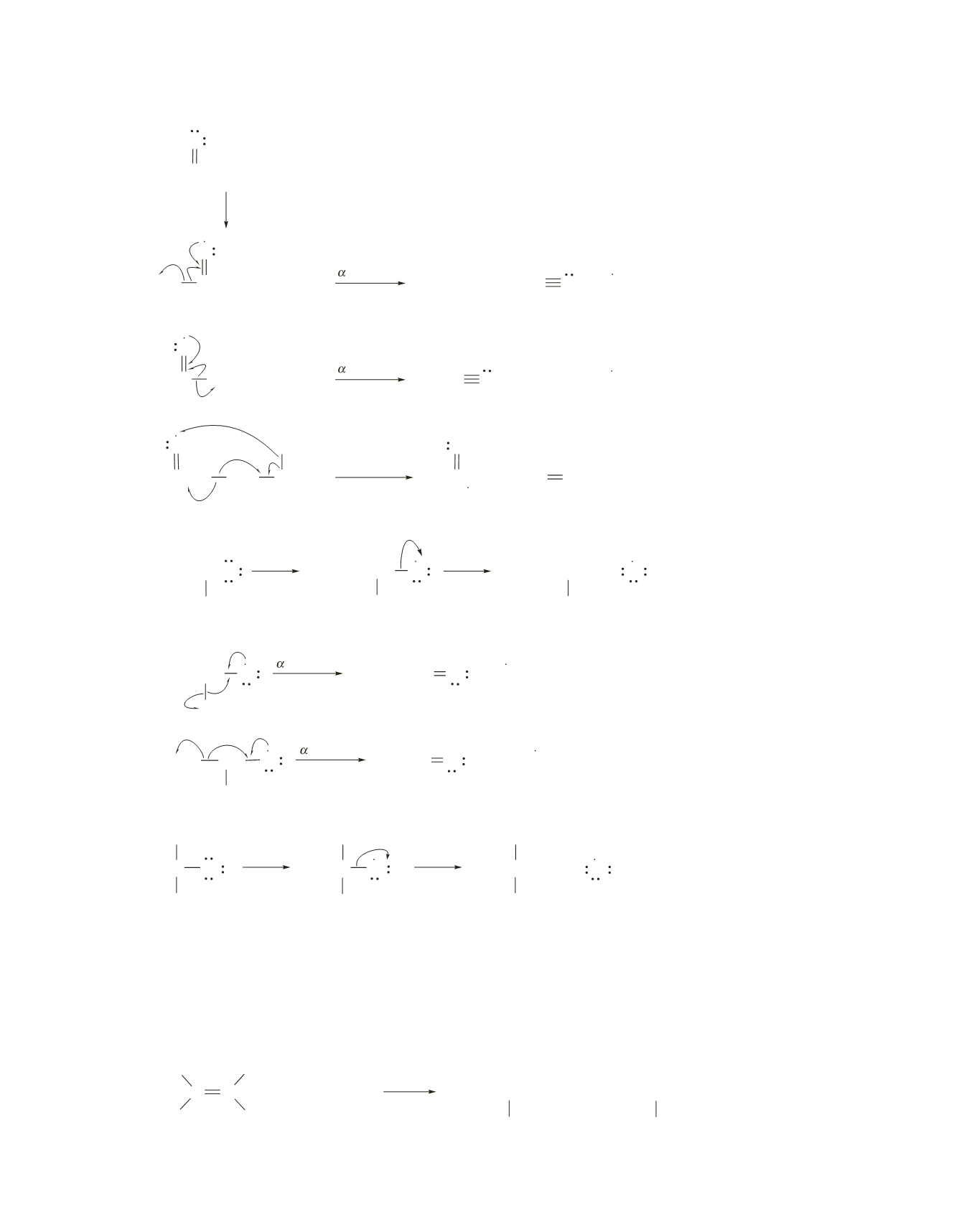
18.
We know from Section 6.5 that when (
Z
)-2-pentene reacts with water and an acid catalyst, 3-pentanol and
2-pentanol are formed. Both alcohols have a molecular weight of 88. (Notice that the first step in solving
this problem is to use chemical knowledge to identify the products.) The absence of a molecular ion peak is
consistent with the fact that the compounds are alcohols.
CH
3
CH
2
CHCH
2
CH
3
OH
+
3-pentanol
CH
3
CHCH
2
CH
2
CH
3
OH
2-pentanol
H
2
SO
4
H
2
O
+
C C
H
H
3
C
CH
2
CH
3
H
(
Z
)-2-pentene