



 107 / 912

Chapter 2
99
Copyright © 2017 Pearson Education, Inc.
36.
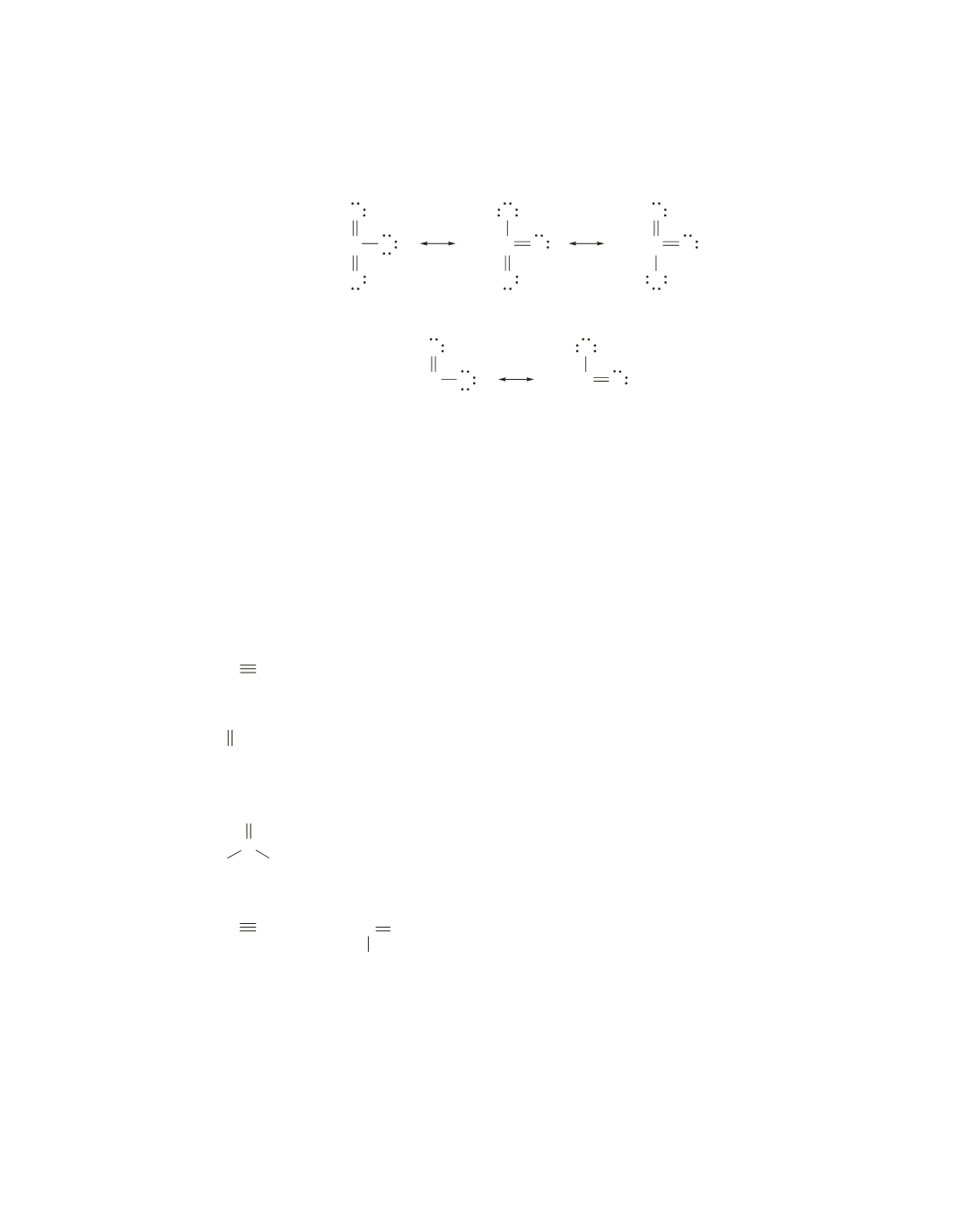
When a sulfonic acid loses a proton, the electrons left behind are shared by three oxygens. In contrast,
when a carboxylic acid loses a proton, the electrons left behind are shared by two oxygens. The sulfonate
ion, therefore, is more stable than the carboxylate ion.
CH
3
S O
O
O
CH
3
S O
−
O
O
CH
3
S O
−
O
O
CH
3
C O
O
CH
3
C O
−
O
−
a sulfonate ion
a carboxylate ion
−
The more stable the base, the stronger its conjugate acid.
Therefore, the sulfonic acid is a stronger acid than the carboxylic acid.
37.
a.
Because the atom (P) to which each of the OH groups is attached is also attached to two electronegative
oxygens and when each OH group loses a proton, the electrons left behind can be shared by two oxygens.
b.
The middle OH group is the weakest of the remaining acidic groups. It is an alcohol
1
p
K
a
15
2
,
and the atom (C) to which it is attached is not attached to any strongly electronegative atoms.
(The protonated amino group has a
p
K
a
value of
10.
)
38.
Remember, the smaller the
p
K
a
,
the stronger the acid.
a.
CH
3
C NH
+
b.
3 3
CH CH
c.
F
3
CCOH
O
d.
an
sp
2
oxygen
C
OH
CH
3
CH
3
CH
3
OCH
3
H
+
p
K
a
= −
7.3
p
K
a
= −
3.6
+
e.
>
CH
3
C NH
+
CH
3
C NHCH
3
+
CH
3
>
CH
3
CH
2
NH
3
+
p
K
a
= −
10.1
p
K
a
= 5.
5
p
K
a
= 11
.0