


 112 / 912

104 Chapter 2
Copyright © 2017 Pearson Education, Inc.
65.
The log of
10
-
4
=
-
4,
the log of
10
-
5
=
-
5,
the log of
10
-
6
=
-
6,
and so on.
Because the
p
K
a
=
-
log
K
a
,
the
p
K
a
of an acid with a
K
a
of
10
-
4
is
-
1
-
4
2
=
4.
An acid with a
K
a
of
4.0
*
10
-
4
is a stronger acid than one with a
K
a
of
1.0
*
10
-
4
.
Therefore, the
p
K
a
can be estimated as being between 3 and 4.
a. 1.
between 3 and 4
2.
between
-
2
and
-
1
3.
between 10 and 11
4.
between 9 and 10
5.
between 3 and 4
6.
between −1 and 0
b. 1.
p
K
a
=
3.4
2.
p
K
a
=
-
1.3
3.
p
K
a
=
10.2
4.
p
K
a
=
9.1
5.
p
K
a
=
3.7
6.
p
K
a
=
-
0.3
c.
Nitric acid
1
HNO
3
2
is the strongest acid because it has the lowest
p
K
a
value. (The lower the
p
K
a
value,
the stronger the acid.)
66.
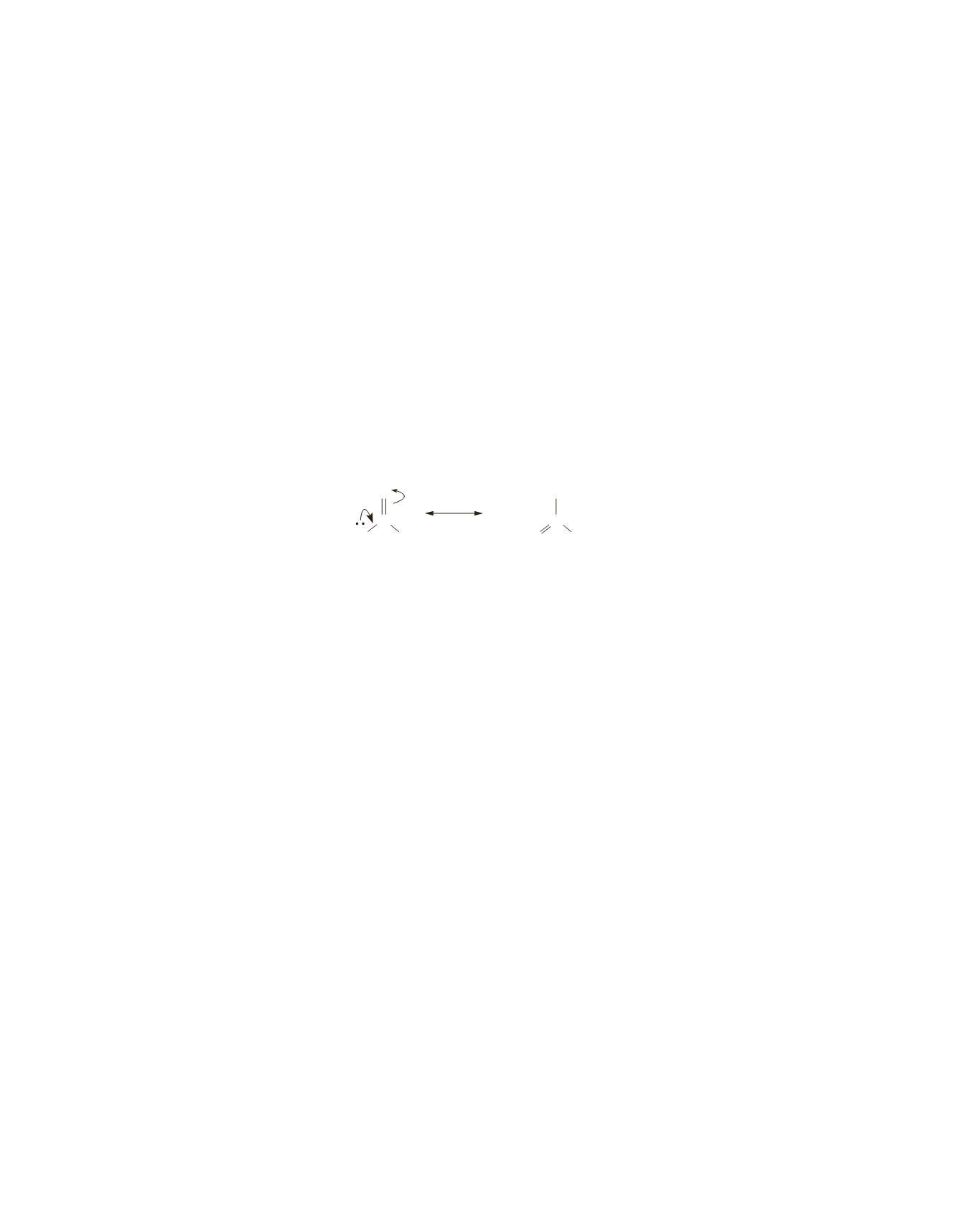
The nitrogen in the chain on the left is the most basic. The nitrogen of the NH
2
group is less basic because
its lone pair is delocalized onto the oxygen, so it is not available to be protonated.
H
2
N
C
O
+
H
2
N
C
O
_
67.
A
and
C
because in each case, the acid is stronger than the acid
1
H
2
O
2
that is formed as a product.
68.
The reaction with the more favorable equilibrium constant is the one with the smallest difference
between the
p
K
a
value of the reactant acid and the
p
K
a
value of the product acid, because
p
K
eq
=
p
K
a
(reactant acid) –
p
K
a
(product acid) and the smaller the
p
K
eq
,
the larger the
K
eq
.
a. 1.
CH
3
CH
2
OH
p
K
a
=
15.9
;
CH
3
OH
p
K
a
=
15.5
;
+
NH
4
p
K
a
=
9.4
p
K
eq
=
p
K
a
1
reactant acid
2
-
p
K
a
1
product acid
2
=
15.9
-
9.4
=
6.5;
K
eq
=
3.2
*
10
-
7
=
15.5
-
9.4
=
6.1;
K
eq
=
7.9
*
10
-
7
Thus, the reaction of
CH
3
OH
with
NH
3
has the more favorable equilibrium constant.
2.
CH
3
CH
2
OH
p
K
a
=
15.9
;
+
NH
4
p
K
a
=
9.4
;
CH
3
N
+
H
3
p
K
a
=
10.7
p
K
eq
=
p
K
a
1
reactant acid
2
-
p
K
a
1
product acid
2
=
15.9
-
9.4
=
6.5;
K
eq
=
3.2
*
10
-
7
=
15.9
-
10.7
=
5.2;
K
eq
=
6.3
*
10
-
6
Thus, the reaction of
CH
3
CH
2
OH
with
CH
3
NH
2
has the more favorable equilibrium constant.
b.
Because the reaction of
CH
3
CH
2
OH
with
CH
3
NH
2
has the smallest difference between the
p
K
a
values
of the reactant and product acids, it has the most favorable equilibrium constant.
69.
If the reaction is producing protons, the basic form of the buffer will pick up the protons. At the pH at
which the reaction is carried out
1
pH
=
10.5
2
,
a protonated methylamine/methylamine buffer with a
p
K
a
=
10.7
will have a larger percentage of the buffer in the needed basic form than will a protonated
ethylamine/ethylamine buffer with a
p
K
a
of 11.0.