


 114 / 912

106 Chapter 2
Copyright © 2017 Pearson Education, Inc.
74.
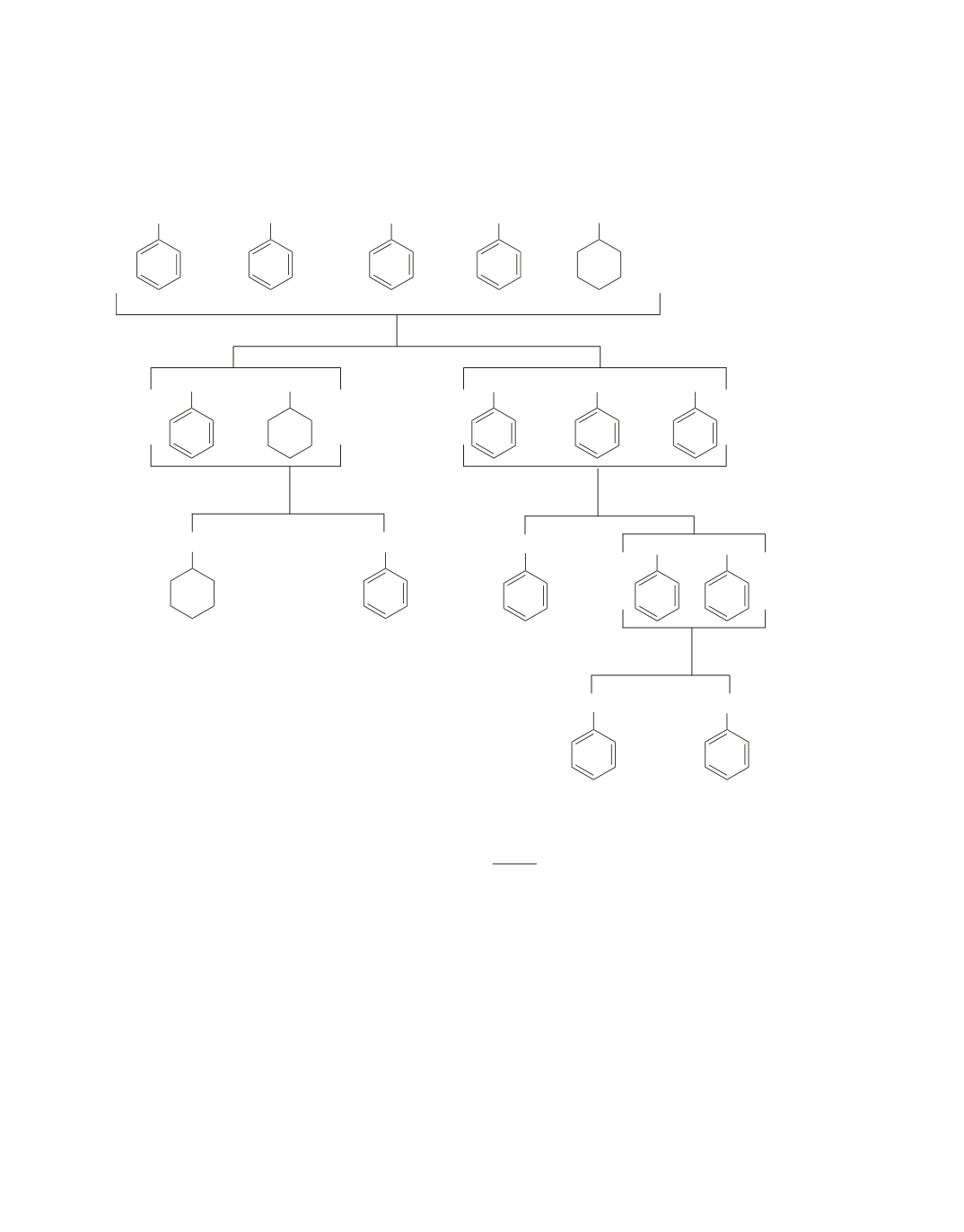
Charged compounds dissolve in water, and uncharged compounds dissolve in ether.
The acidic forms of carboxylic acids and alcohols are neutral, and the basic forms are charged.
The acidic forms of amines are charged, and the basic forms are neutral.
COOH
+
NH
3
p
K
a
=
4.17
p
K
a
=
4.60
OH
p
K
a
=
9.95
Cl
+
NH
3
p
K
a
=
10.66
+
NH
3
+
NH
3
COOH
OH
Cl
NH
2
+
NH
3
COO
−
OH Cl
O
−
Cl
water layer
ether layer
add H
2
O and adjust the pH
so it is between 7 and 8
add ether
adjust the pH of H
2
O so it is between 7 and 8
ether layer
ether layer
water layer
add H
2
O with pH = 12
water layer
ether layer
ether
water layer
water at pH = 2.0
75.
For a discussion of how to do problems such as Problems 68–70, see
Special Topic I
(pH,
p
K
a
,
and Buffers).
p
K
a
=
pH
+
log
3
HA
4 3
A
-
4
The above equation, called the Henderson–Hasselbalch equation, shows that:
1.
When the pH equals the
p
K
a
,
the concentration of buffer in the acidic form [HA] equals the concentra-
tion of buffer in the basic form
3
A
-
4
.
2.
When the pH of the solution is less than the
p
K
a
,
more buffer species are in the acidic form than in the
basic form.
3.
When the pH of the solution is greater than the
p
K
a
,
more buffer species are in the basic form than in
the acidic form.
Because the pH of the blood
1
7.3
2
is greater than the
p
K
a
of the buffer (6.1), more buffer species are in
the basic form than in the acidic form. Therefore, the buffer is better at neutralizing excess acid.