


 845 / 912

Chapter 27 837
Copyright © 2017 Pearson Education, Inc.
27.
a.
CH
2
CHCH
2
CH
3
b.
O
CH
3
c.
CH
2
CH
N
d.
ClSO
2
SO
2
Cl
+
H
2
N(CH
2
)
6
NH
2
a
,
b
,
c
,
e
, and
g
are chain-growth polymers.
d
,
f
, and
h
are step-growth polymers.
e.
CH
2
CCH CH
2
CH
3
f.
HO(CH
2
)
5
COH
O
g.
CH
2
CCH
3
h.
HOC
COH
O
O
+
HOCH
2
CH
2
OH
28.
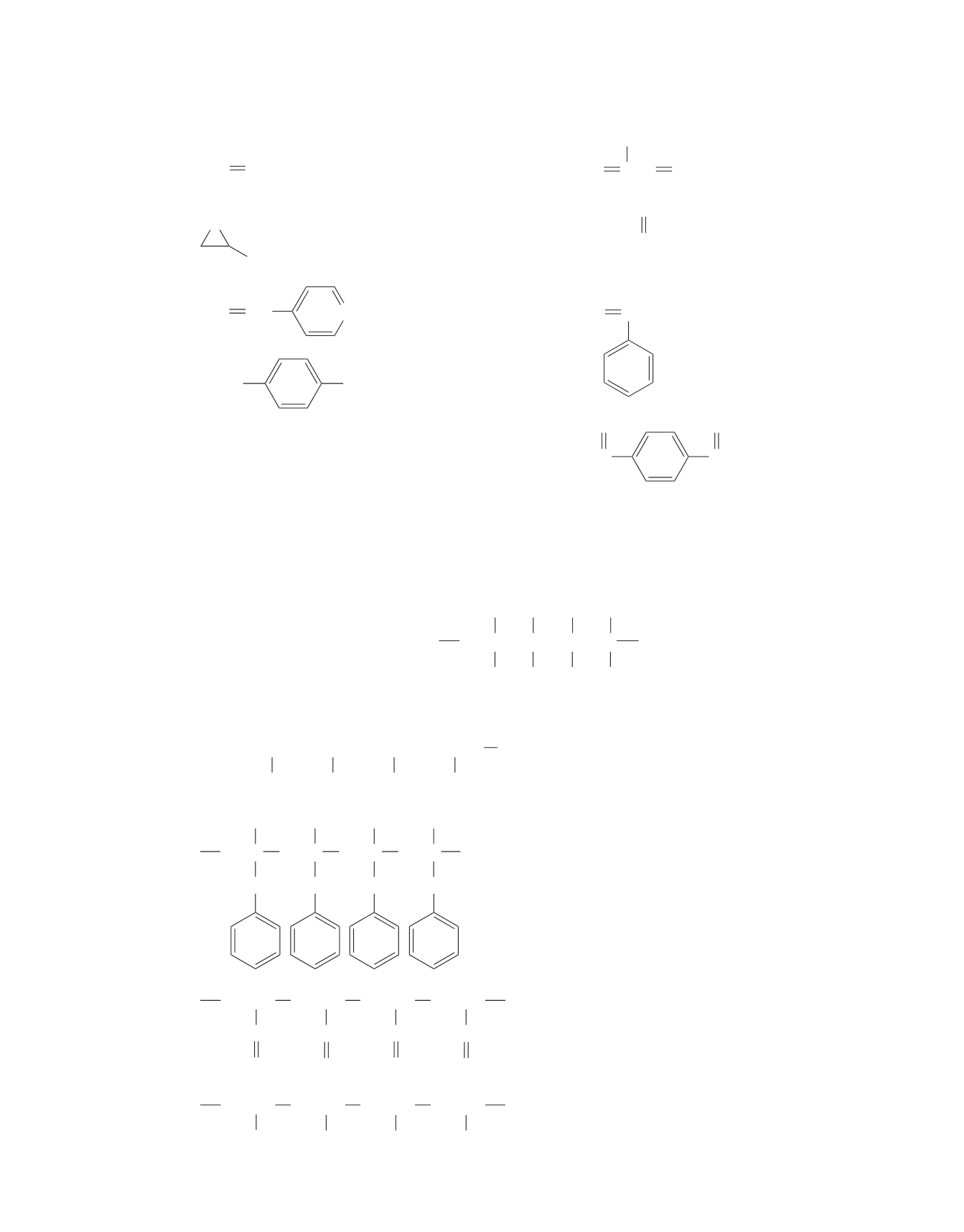
Whether a polymer is isotactic, syndiotactic, or atactic depends on whether the substituents are all on
one side of the carbon chain, alternate on both sides of the chain, or are random with respect to the chain.
Because a polymer of isobutylene has two identical substituents on each carbon in the chain, different
configurations are not possible.
CH
2
CCH
2
CCH
2
CCH
2
C
CH
3
CH
3
CH
3
CH
3
CH
3
CH
3
CH
3
CH
3
polymer of isobutylene
29.
a.
CH
3
OCH
2
CHOCH
2
CHOCH
2
CHOCH
2
CHO
CH
3
CH
3
CH
3
CH
3
b.
CHCH
3
CH
2
C
CH
3
CH
2
C
CHCH
3
CH
3
CHCH
3
CH
2
C
CH
3
CH
2
C
CHCH
3
CH
3
c.
CH
2
CH CH
2
CH CH
2
CH CH
2
CH
COCH
3
COCH
3
COCH
3
COCH
3
O
O
O
O
d.
CH
2
CH CH
2
CH CH
2
CH CH
2
CH
OCH
3
OCH
3
OCH
3
OCH
3