


 825 / 912

Chapter 26 817
Copyright © 2017 Pearson Education, Inc.
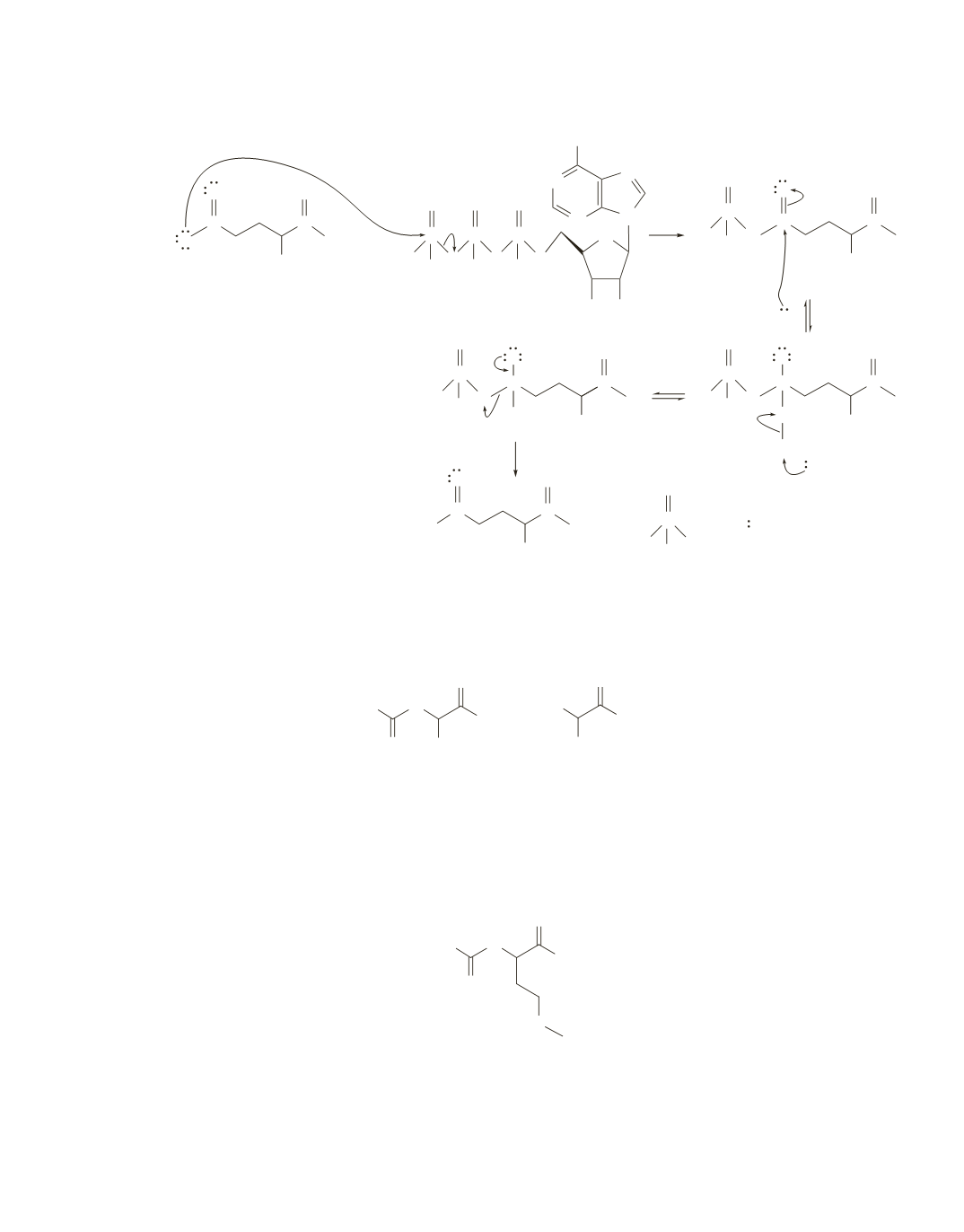
24.
N
N N
N
NH
2
O
HO OH
+
ADP
NH
3
+
+
HB
+
+
ATP
_
C
C
O
O
NH
3
O
+
_
O
_
C
C
O
O
NH
3
+
C
NH
H
3
O
NH
2
+
_
C
NH
3
2
NH
+
+
NH
3
H
2
N
+
−
O
−
O O
P
O
−
O
P
O
O
−
O O
P
O
−
O
−
O O
P
O
O
−
O
−
O O
P
O
−
O
−
O O
P
O
_
C
O
O
_
C
O
O
_
C
O
O
−
−
O OH O
P
O
C
O
O
_
B
+
B
25.
a.
Ile
b.
Asp
c.
Val
d.
Val
26.
The ribosome, the particle on which protein synthesis occurs, has a binding site for the growing peptide
chain and a binding site for the next amino acid to be incorporated into the chain.
peptide binding site amino acid binding site
_
R N
O
_
O
O
R O
H
H
3
N
O
R
+
In protein synthesis, all peptide bonds are formed by the reaction of an amino acid with a peptide, except
the first peptide bond, which must be formed by the reaction of two amino acids. Therefore, for the
synthesis of the first peptide bond, the first (N-terminal) amino acid must have a peptide bond that will fit
into the peptide binding site. The formyl group of
N
-formylmethionine provides the peptide group that will
be recognized by the peptide binding site for formation of the first peptide bond.
N
-formylmethionine
_
H N
O
O
O
S
H