


 693 / 912

Chapter 20 685
Copyright © 2017 Pearson Education, Inc.
31.
a.
Amylose has
a
-1,4 -glycosidic linkages, whereas cellulose has
b
-1,4 -glycosidic linkages.
b.
Amylose has
a
-1,4 -glycosidic linkages, whereas amylopectin has both
a
-1,4 -glycosidic linkages
and
a
-1,6 -glycosidic linkages.
c.
Glycogen and amylopectin have the same kind of linkages, but glycogen has a higher frequency of
a
-1,6 -glycosidic linkages.
d.
Cellulose has a hydroxy group at C-2, whereas chitin has an
N
-acetyl amino group at that position.
32.
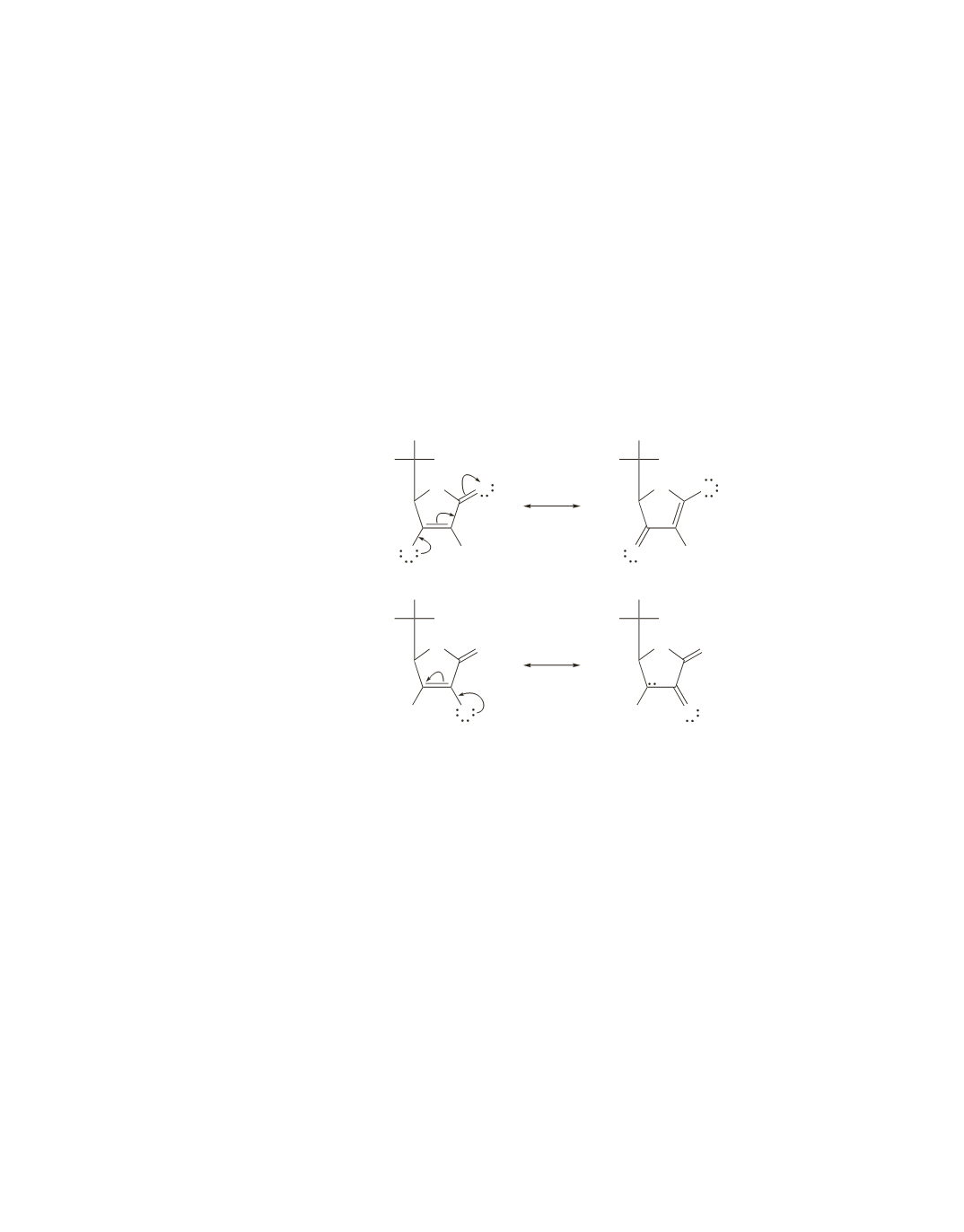
A proton is more easily lost from the C-3 OH group because the electrons that are left behind when the
proton is removed are delocalized onto an oxygen. When a proton is removed from the C-2 OH group, the
electrons that are left behind are delocalized onto a carbon. Because oxygen is more electronegative than
carbon, a negatively charged oxygen is more stable than a negatively charged carbon. Recall that the more
stable the base, the stronger its conjugate acid.
O
OH H
CH
2
OH
OH O
O
O
OH
H
CH
2
OH
OH O
O
O
OH H
CH
2
OH
O HO
O
O
OH
H
CH
2
OH
O HO
O
_
_
_
C-3
C-2
_
33.
a.
People with type O blood can receive blood only from other people with type O blood because types
A, B, and AB blood have sugar components that type O blood does not have.
b.
People with type AB blood can give blood only to other people with type AB blood because type AB
blood has sugar components that types A, B, and O blood do not have.